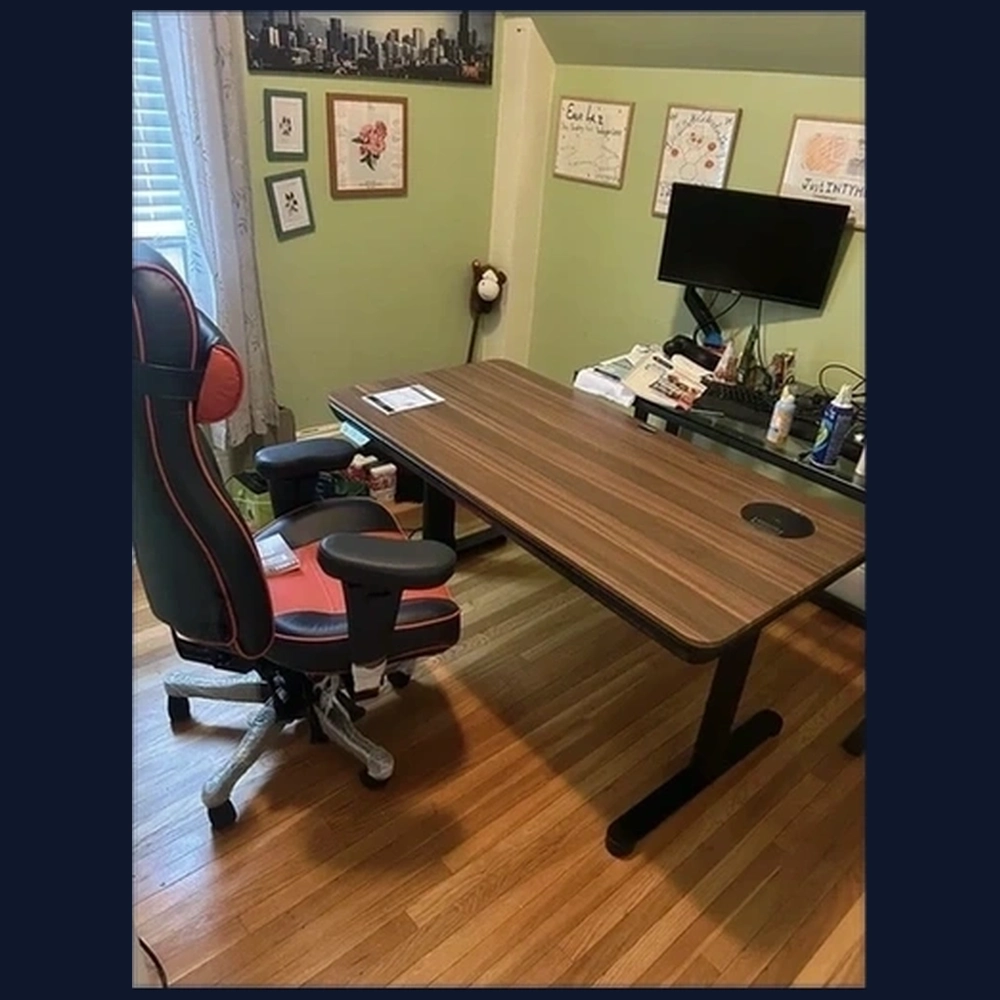
1. Seating Mechanics & Posture: Why Overly Soft Foam Increases Lower Back Strain
A pervasive myth in office ergonomics is that a plush, pillowy seat cushion cures back pain. In reality, thick memory foam is often the worst enemy of sciatica and spinal stenosis sufferers. When you sit on soft, deep foam, your ischial tuberosities (sit bones) sink down while your pelvis rolls backward into a posterior pelvic tilt. This rotation flattens your natural lumbar lordosis, increases intradiscal pressure in the L4-L5 and L5-S1 vertebrae by over 40%, and compresses the piriformis muscle directly against the sciatic nerve. Clinical protocols from Cornell University's Ergonomics Lab (CUErgo) and OSHA emphasize that restorative seating requires medium-firm density, an active lumbar curve that matches your lordotic apex, and a forward waterfall seat edge that leaves exactly two to three fingers of space behind your knee crease to maintain femoral blood circulation.